
Key Takeaways
- Construction and demolition waste recycling helps manage site debris efficiently, minimizing congestion and costs.
- Planning is crucial; contractors should identify materials and establish clear waste management practices before work begins.
- Contractors must separate hazardous materials and choose the right C&D facility to ensure compliance and efficiency.
- Creating a simple waste plan and preventing contamination are key to successful debris management on-site.
- Documenting weight tickets and disposal records supports reporting and compliance for recycling efforts.
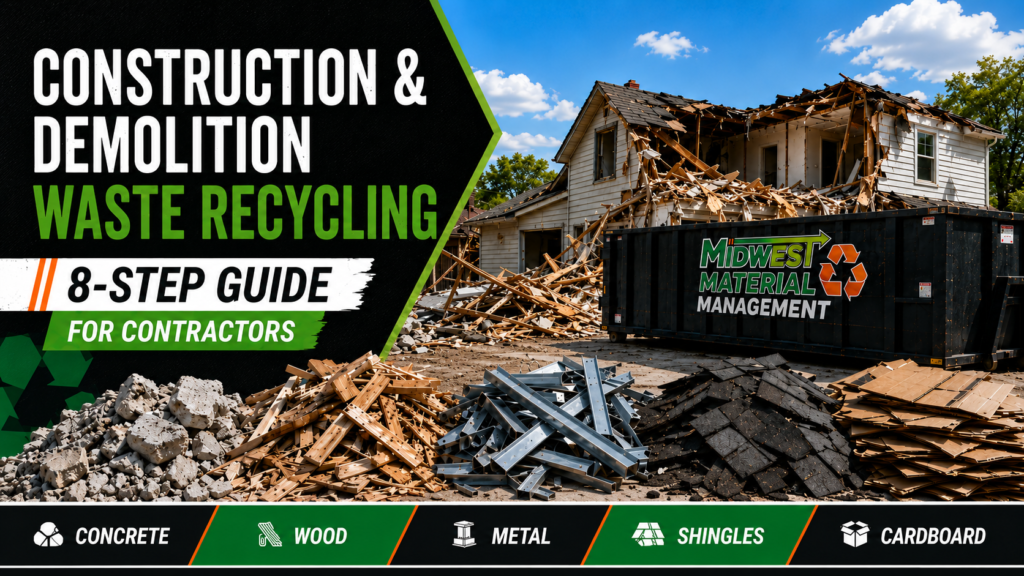
Construction and demolition projects can generate concrete, wood, metal, shingles, cardboard and many other materials. Without a clear waste management plan, those materials can quickly create jobsite congestion, contaminated loads, added hauling costs and project delays.
Construction and demolition waste recycling, commonly called C&D recycling, gives contractors a more organized way to manage jobsite debris. The key is to plan before work begins, understand what the receiving facility accepts and make sure everyone on the jobsite follows the same process.
What Is Construction and Demolition Waste?
Construction and demolition waste includes materials generated during the construction, renovation, repair or demolition of buildings and other structures.
Construction and demolition waste accounts for more than one-third of all waste generated globally, demonstrating why recovering and recycling usable building materials is increasingly important (United Nations Environment Programme).
Why Contractors Should Plan for C&D Waste Before Work Begins
Waste management is sometimes treated as a final cleanup task. In practice, the decisions made before construction or demolition begins often determine how smoothly debris moves off the site. The plan does not need to be complicated. It should clearly identify what materials will be generated, where they will go and who is responsible for managing them.
Below are 8-steps to follow for easy waste recycling:
1. Identify the Materials the Project Will Generate
Start by reviewing the project scope and estimating the primary debris streams.
A roofing contractor may generate shingles, underlayment, nails, flashing, wood and packaging. A remodeling contractor may have drywall, cabinets, flooring, windows, lumber, metal and cardboard. Demolition work can create a much broader mixture of concrete, block, brick, wood, drywall, roofing materials and fixtures.
Consider the following questions:
- Which materials will make up most of the load?
- Will the project generate especially heavy debris?
- Can reusable materials be removed before demolition?
- Will the debris contain hazardous or regulated materials?
- Can any high-volume material be kept separate?
- How frequently will containers need to be exchanged?
This inventory will help determine whether the job needs one mixed C&D container, multiple containers or a combination of drop-off and hauling services.
2. Separate Hazardous and Prohibited Materials
Standard construction debris containers and C&D recycling facilities are intended for approved, non-hazardous materials.
Hazardous or regulated materials may require testing, specialized contractors, separate transportation or disposal at an authorized facility. Depending on the age and condition of the structure, these materials could include asbestos-containing products, lead-contaminated debris, chemicals, solvents, fuel, wet paint or other regulated substances.
Contractors should evaluate these risks before demolition or renovation begins. Never place a questionable material in a C&D container and assume the receiving facility will sort it out.
Midwest Material Management (MMMRecycles.com) does not accept hazardous materials, food waste or landscape and yard waste as part of its mixed C&D loads. Contractors should call before loading unusual material or sending the first truck to the facility.
3. Decide Between Mixed and Source-Separated Loads
One of the most important decisions is whether to combine materials in a mixed C&D container or separate them by material type.
Mixed C&D Loads
Mixed loads allow crews to place multiple approved construction materials into the same container.
This approach may work well when:
- The project has limited space for containers.
- Several materials are being removed at the same time.
- The volume of each individual material is relatively small.
- Frequent sorting would slow down production.
- The receiving facility accepts mixed C&D debris.
Mixed loads are convenient, but crews still need to keep hazardous, prohibited and non-construction waste out of the container.
Source-Separated Loads
Source separation means using dedicated containers or stockpiles for materials such as concrete, metal, wood, cardboard or shingles.
This approach may be useful when:
- A project generates a large amount of one material.
- Heavy materials need a separate container.
- The project has sufficient space for multiple containers.
- The owner requires detailed diversion reporting.
- The material can be reused or handled separately.
- Separate pricing is available for certain clean materials.
Source separation only works when containers are clearly labeled and crews understand the plan. One contaminated container can undo the benefits of separating the material.
4. Match the Container to the Material
Container selection should be based on both volume and weight.
Light materials such as cardboard, packaging and some wood debris may fill a large container without reaching its weight capacity. Concrete, brick, block, shingles and other dense materials can reach weight limits before the container appears full.
Before ordering a container, tell the provider:
- What type of project you are completing
- The primary materials being removed
- Whether the load will be mixed or separated
- The estimated debris volume
- The available space at the jobsite
- Whether there are access or delivery restrictions
- How quickly the container may need to be exchanged
Midwest Material Management (MMMRecycles.com) offers construction containers ranging from 3 cubic yards to 125 cubic yards. Available options include small dumpsters, traditional roll-off containers and large-capacity containers for higher-volume projects. largest container is not automatically the best option. The appropriate size depends on the debris type, weight, jobsite access and pickup schedule.
5. Choose the Right C&D Facility or Hauling Partner
Before the first load leaves the project, confirm exactly where the debris is going.
Questions to ask include:
- Does the facility accept mixed C&D debris?
- Which materials are accepted separately?
- Which materials are prohibited?
- Are there minimum charges or minimum weights?
- Are prices based on weight, load or material type?
- What are the facility hours?
- Is personal protective equipment required?
- Are weight tickets or recycling reports available?
- Should unusual loads be approved in advance?
- Does the company provide dumpsters or transportation?
Contractors in Kane County are advised to confirm that their hauler takes C&D material to a C&D recovery facility rather than a standard municipal solid waste transfer station or landfill. ew minutes spent confirming these details can help prevent a truck from arriving with an unacceptable load.
6. Create a Simple Jobsite Waste Plan
The waste plan should be easy for employees and subcontractors to follow.
Identify:
- Where each container will be located
- What belongs in each container
- What is prohibited
- Who will monitor the containers
- Who will request pickups or exchanges
- Where tickets and receipts will be stored
- Who should be contacted with questions
Post signs using plain language such as:
- Mixed Construction Debris Only
- Concrete and Masonry Only
- Clean Wood Only
- Cardboard Only
Pictures can be helpful on jobsites where multiple trades or languages are represented.
The superintendent or project manager should review the plan during the initial jobsite orientation. The process should also be explained to subcontractors who arrive later in the project.
7. Prevent Load Contamination
Contamination occurs when prohibited or unintended material is placed in a container.
Common problems include:
- Food and beverage waste
- Household garbage
- Paint, solvents or chemicals
- Fuel containers
- Batteries
- Landscaping debris
- Materials containing asbestos
- Unapproved liquids
- Mixed waste placed in a material-specific container
To reduce contamination:
- Place regular trash containers near work areas.
- Use clear signs on every C&D container.
- Keep container locations well lit and accessible.
- Cover or secure containers when unauthorized dumping is a concern.
- Assign someone to inspect containers regularly.
- Address mistakes as soon as they are found.
Do not wait until the container is ready for pickup to check its contents.
8. Keep Weight Tickets and Disposal Records
Documentation may be necessary for project owners, municipalities, sustainability programs or internal reporting.
Keep records such as:
- Weight tickets
- Disposal receipts
- Material descriptions
- Pickup dates
- Container numbers
- Receiving facility information
- Reuse or donation receipts
- Recycling or diversion reports
Create a consistent storage location for these records. This could be a project folder, shared drive or construction management platform.
Waiting until the project is complete to collect documentation can lead to missing tickets and incomplete reporting.
Common C&D Waste Management Mistakes
Confirm container availability, placement and hauling requirements before crews begin producing debris.
Dense debris may exceed the container’s weight allowance before the container is full.
Material rules, pricing and operating procedures vary. Confirm the requirements of the actual receiving facility.
Hazardous and regulated materials require separate evaluation and handling.
A waste plan is only effective when every crew understands it.
Assign responsibility for collecting and storing project documentation from the beginning.
Container delivery and exchange require sufficient clearance, stable ground and room for the truck to maneuver.
Plan Your Next C&D Project With MMM Recycles
A successful construction and demolition waste recycling program starts before the first wall comes down or the first container arrives.
Identify your materials, keep prohibited items separate, select the right container and confirm facility requirements in advance. A clear plan can make jobsite cleanup easier while helping valuable construction materials move toward another use.
Call (847) 426-6354 to discuss your project, confirm accepted materials, arrange waste transportation or select a construction dumpster.
Additional articles you may be interested in:


